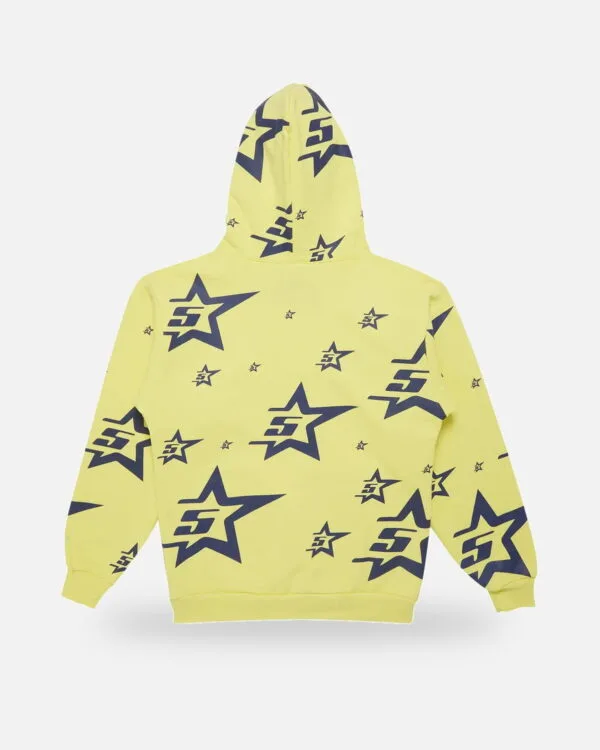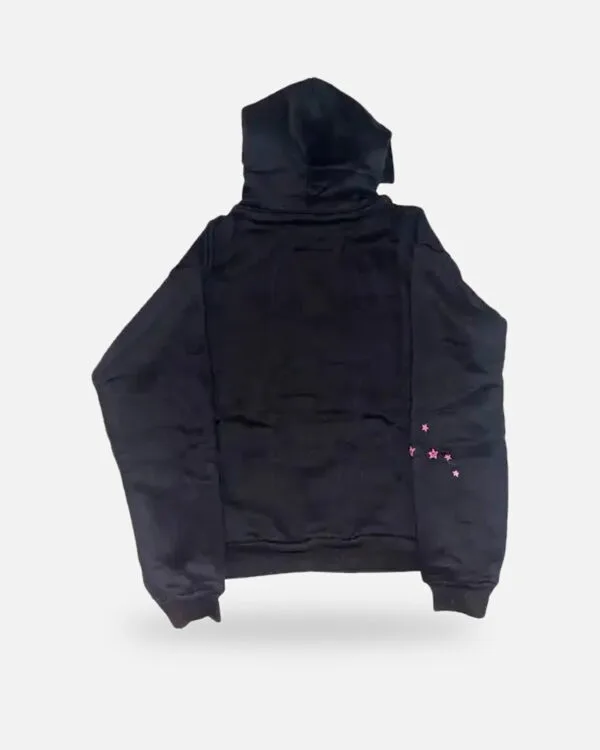

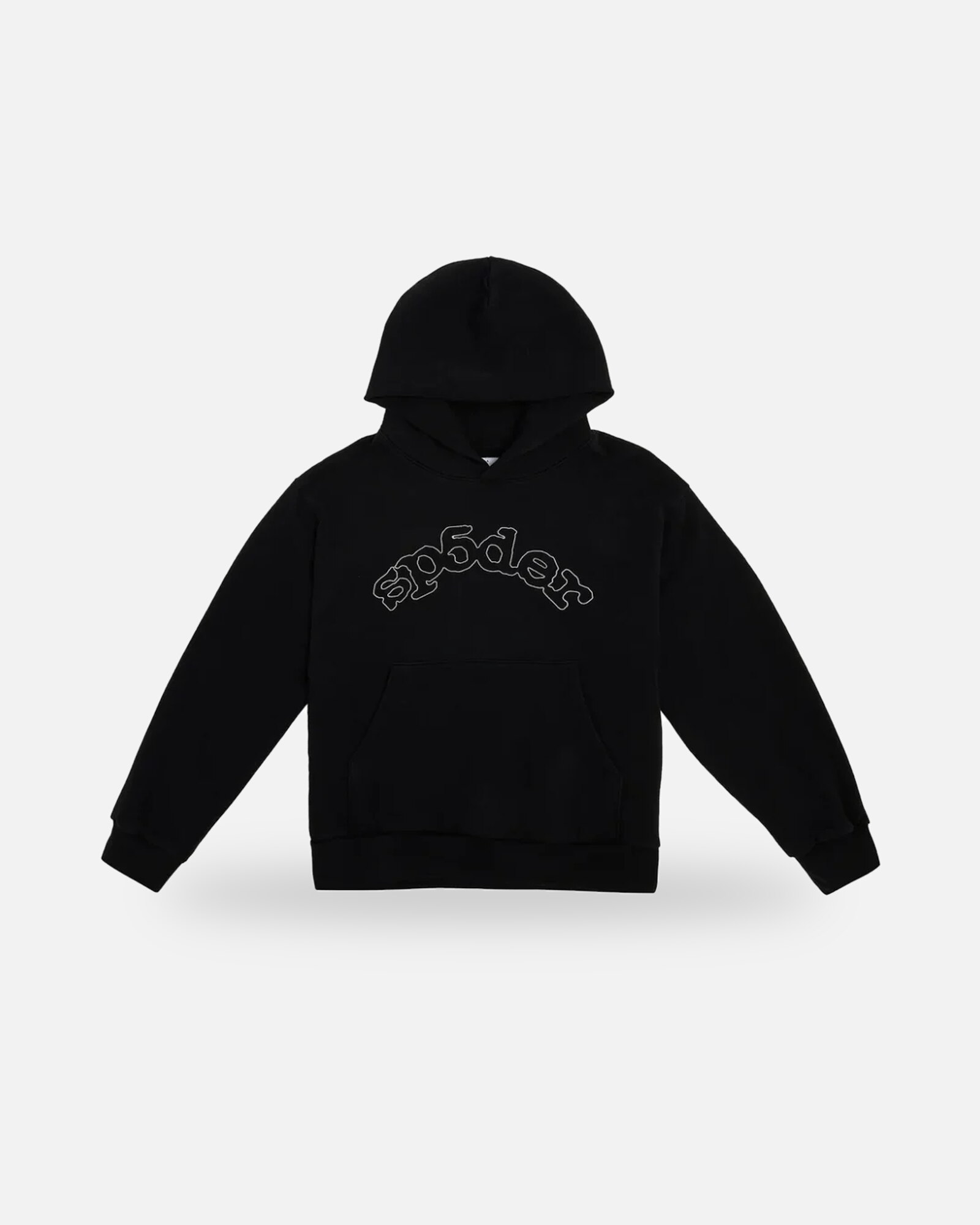
We make a heavyweight oversized hoodie at 380 GSM, and it earns its place if you want a sweatshirt that keeps its own shape. One that sits over a tee from the first cold week of fall to the end of winter, and comes out of the wash the same garment that went in. It is the wrong pick if you run warm indoors. What follows is the cloth, the cut, the sizing and the care behind our. Spider Canada hoodies, in numbers rather than size letters.
The short version:
- 380 GSM lands inside the disputed heavyweight band. Plenty of mills put the line at 350. Others want 400 first.
- A drop shoulder pushes the seam 2 to 4 inches down the arm, give or take. After that, the size letter tells you less than chest and body length do.
- 100% cotton French terry gives up about 3 to 5 percent on the first wash. Cold water and a hang dry hold it at the low end.
- Cold water. Inside out. Never the dryer. Three habits, and a printed graphic stops cracking.
What GSM Actually Measures
Grams per square meter, nothing more complicated than that. Cut a square meter of the cloth, weigh it before a single sleeve is sewn on, and the scale gives you the figure. The garment you end up holding weighs something else entirely. An oversized body with a dropped sleeve eats far more cloth than a tee cut from the same roll would. Pick up our Wait Web and our Thug tee together. The gap in your hands is wider than 380 against 180, because one of them simply uses more fabric.
Where 380 GSM Sits When Sources Disagree
Ask where heavyweight starts and you will be handed two answers. Plenty of mills and retailers say 350, the top of the standard fleece band. Others refuse the word under 400, the weight at which cloth stops draping and begins holding a shape of its own. That leaves 380 inside the argument rather than settling it. On the body the answer is less academic. Put on our OG Web or our Phantom and the hood stays up without help, the chest sits away from you rather than against it, and none of it crosses over into outerwear.
Weight, Thickness and Warmth Are Three Things
The scale only reports weight. Thickness is a separate matter, settled by the knit and by whether the inside has been brushed. Warmth draws on both of those, plus whatever air the structure manages to hold. Two fabrics can share a GSM and behave nothing alike once it turns cold, one a dense flat knit, the other loose and napped. Our. heavyweight graphic hoodies are cut from a brushed French terry, so the weight arrives with loft. The bands below are the ones most people work from.
| GSM range | What it is | How it feels | Suited to |
|---|---|---|---|
| 100-150 | Light jersey | Thin, drapes, slightly sheer | Summer tees |
| 150-180 | Midweight jersey | Standard tee hand | Everyday tees |
| 180-240 | Heavy jersey | Dense, holds a boxy shape | Oversized tees, long sleeves |
| 280-320 | Light to mid fleece | Soft, easy to fold | Spring, three-season layering |
| 350-400 | Heavyweight fleece | Structured, stands on its own | Cold weather, oversized cuts |
| 500+ | Deep winter | Stiff, coat-like | Freezing temperatures |
French Terry Against Brushed Fleece
French terry has small loops on the inside face and a flat, smooth outside. The loops leave channels for air, so it breathes better than a napped fleece and feels drier on the skin. Brushed fleece begins as exactly the same loop structure. Everything that separates the two happens to those loops afterward.
How a Brushed Interior Is Actually Made
Napping. The terry loops run against rotating wire brushes, and the brushes tease the fiber ends open. The raised surface usually gets sheared level afterward. That gives the even, fuzzy inside you know from a sweatshirt. More trapped air, so warmer. Also a looser surface fiber, which costs it breathability and leaves it more inclined to pill or shed over time. Every pullover and zip we make, from the OG Web to the OG Web V2, is a 380 GSM French terry brushed on the inside only. Loop side takes the warmth. Flat side stays flat.
Which Surface Takes a Print Better?
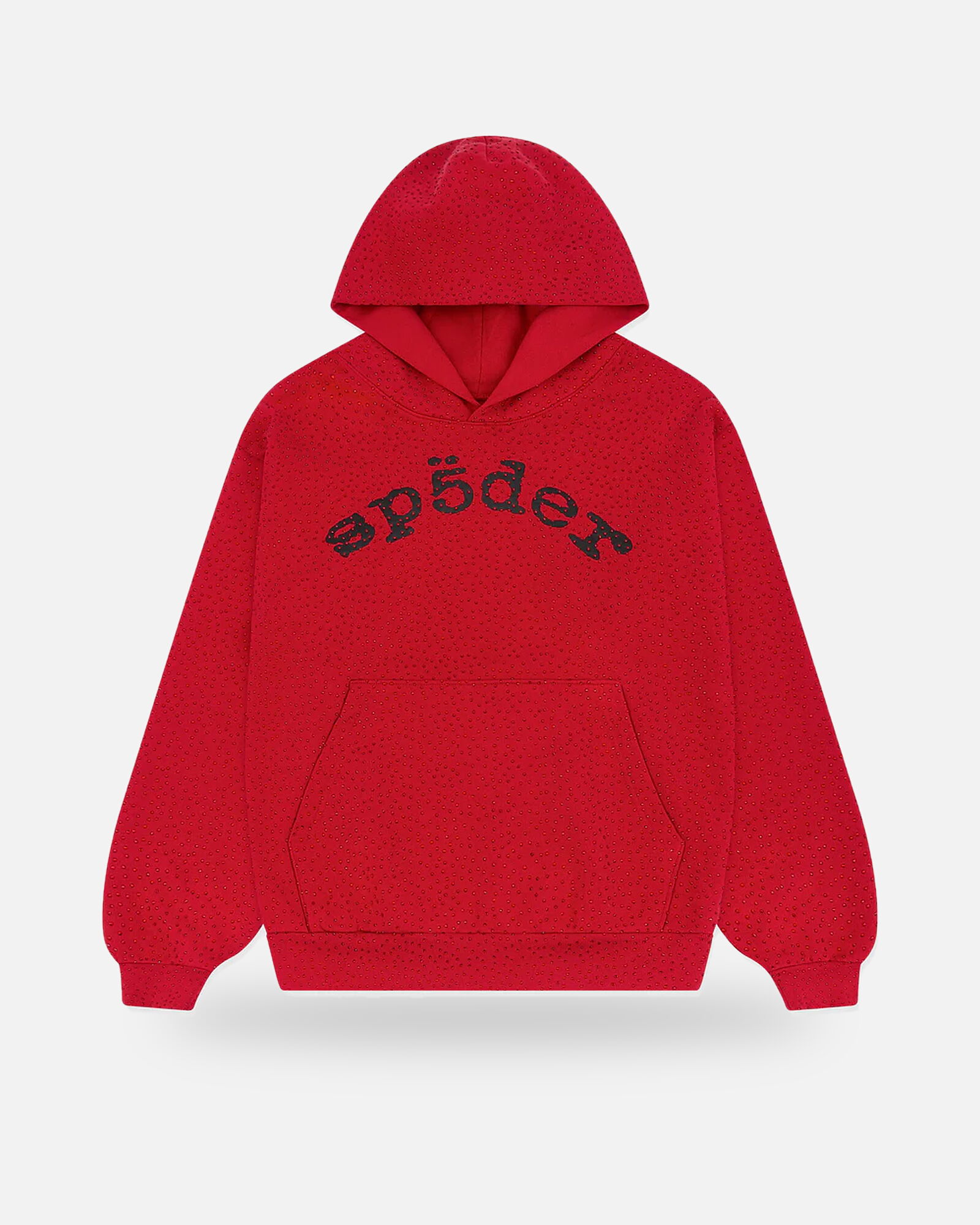
Print and embroidery both want a smooth, stable face to work on. The outside of French terry is that face. No nap for ink to sink between. No loose surface to shift under a needle. That is the reason we leave the outer face unbrushed. The logo on our red Rhinestone hoodie sits on that smooth face, and a heavyweight oversized hoodie carries a large chest or back print without the edges feathering. Hold the fabric’s dimensions stable too and the graphic stops distorting across the chest.
Why 100% Cotton, Not a Blend
Ink. That is the whole reason we stay at 100% cotton. Direct-to-garment printing needs a cotton fiber to bond with. Push the polyester share up and adhesion gets unreliable, which turns a graphic on a blend into a gamble from the first wash onward. None of this makes blends bad cloth. Polyester is the tougher fiber of the two. A 50/50 fabric pills less, and it dries in a fraction of the time cotton takes. Here is the catch, though. When a blend does pill, the pills are there for good, because a strong fiber will not snap off the way a cotton fiber does. Our hoodies are built around a graphic, and for those the trade is a short one. Cotton gives the ink something to hold.
What the First Wash Does
Heat is what moves cotton, and the first cycle is where almost all the movement happens.
| Fabric | Typical first-wash shrinkage |
|---|---|
| 100% cotton French terry | 3 to 5 percent, reported as high as 10 on unfinished goods |
| Preshrunk cotton, washed hot | up to about 5 percent |
| 50/50 cotton-poly blend | around 2 to 3 percent |
| Polyester | near zero |
Wash cool, gentle cycle, nothing hot, and a heavyweight oversized hoodie stays at the bottom of its range. You see the change at the hem before anywhere else, and only the once.
How a Drop Shoulder Changes the Fit
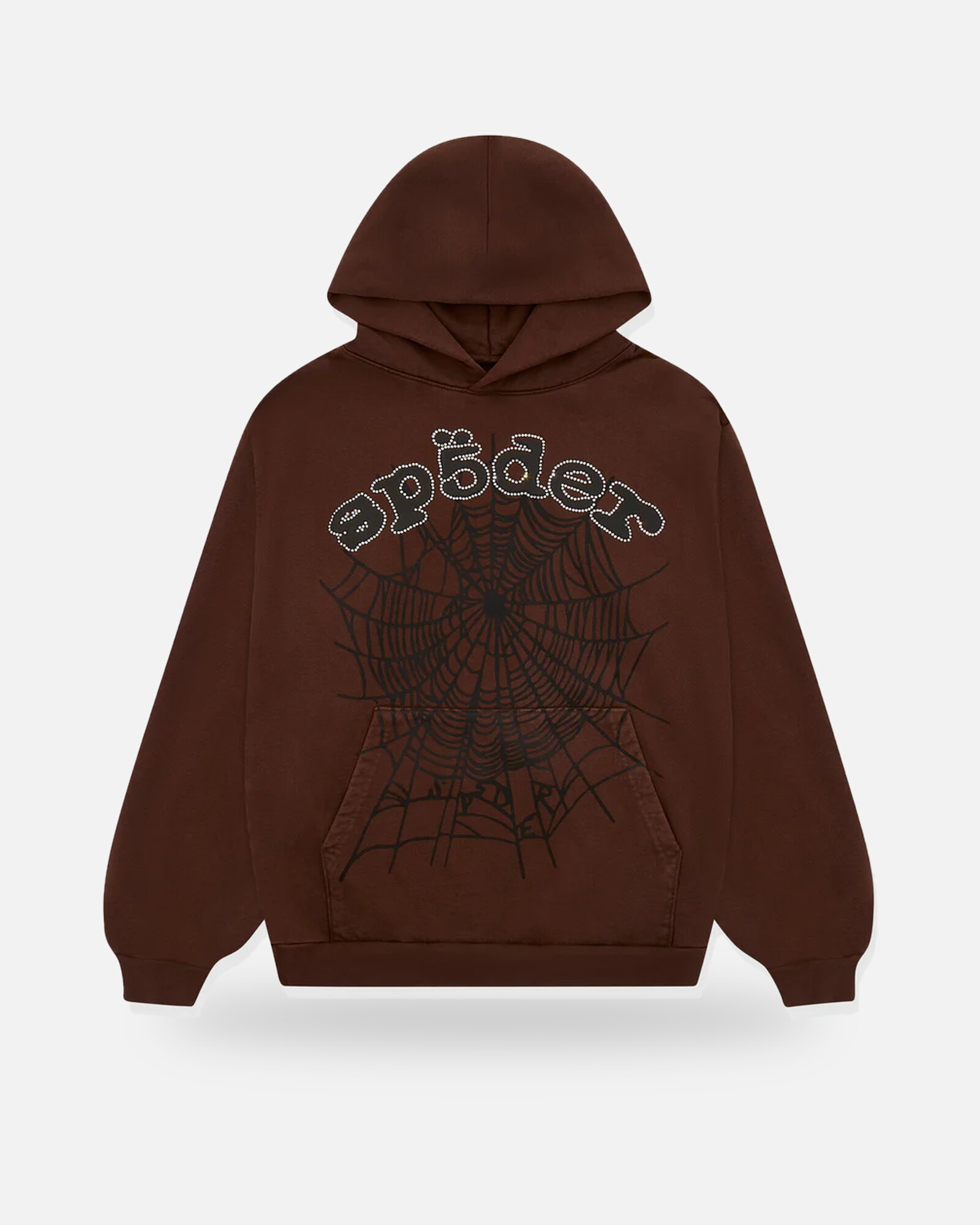
On a regular fit the shoulder seam sits on the shoulder bone and the body follows yours. A drop shoulder moves that seam down the arm, 2 to 4 inches below the shoulder point, give or take. Sleeve starts lower. Chest reads wider. Above the chest the cloth more or less stops touching you. It hangs from the shoulder point and the sleeve, not from your frame. Whether that reads as a decision or as a borrowed hoodie comes down to whether the seam was placed there on purpose. On our Wait Web it was, and 380 GSM is heavy enough to keep it there.
Oversized Is a Cut, Not a Bigger Size
You cannot get here by buying a regular hoodie a size up. Do that and the seam lands somewhere on the upper arm with no plan behind it. The body runs too long as well. An oversized pattern is drawn as a silhouette. Chest room and seam drop get decided together, and the body length with them. A relaxed-oversized cut carries about 2 to 4 inches of chest room over the body measurement. A classic streetwear oversized cut carries about 4 to 8 inches, with the dropped seam. Our Spider Wait Web Hoodie Slate Gray is drawn on the second of those. Most people take their usual letter and let the cut do the work.
The Four Measurements Worth Comparing
Four numbers decide whether a heavyweight oversized hoodie fits the way you pictured it. Chest width, laid flat from underarm to underarm and doubled. Body length, shoulder to hem. Sleeve length. How far the shoulder seam drops. Take a hoodie you already like and lay it flat. Measure those four. Then put them next to our. size guide with flat measurements for this one. A size letter says nothing about where the seam sits or where the hem falls. Those four numbers do.
What This Weight Feels Like Through the Year
Pick up our OG Web in Black and you notice the weight. Put it on and you stop noticing. Fleece in the 350 to 400 band is meant for cold weather and structured cuts. Indoors, or anywhere the climate is mild, it can run too warm. Fall and winter, then, and not the rest. That is the honest ceiling on a heavyweight oversized hoodie, ours included.
Layering Over a Tee and Under a Jacket
Tee underneath, jacket over the top. The dropped shoulder leaves room for a tee sleeve to move. The flat outer face slides under a shell or a denim jacket without bunching at the elbow. On days when the hoodie is the outer layer, our Spider Atlanta Full Zip Hoodie Heather Gray is the same 380 GSM French terry with a full-length zip. Easier to open when the room is warmer than the street was.
When a Heavier Hoodie Is the Wrong Call
Heated offices. Spring afternoons. Anywhere you will be moving hard. A 280 to 320 GSM fleece is the better tool for all three. We do not make one; the nearest thing in our range is the 240 GSM Web crewneck, a jersey rather than a fleece. Above 500 GSM you are into deep-winter cloth that behaves like a coat. The 380 band sits between those two, nearer the heavy end. When the temperature really drops, it does not stand in for the coat.
What Happens After Twenty Washes
By the twentieth cycle our cotton French terry has done all the moving it is going to do. The first cycle took its 3 to 5 percent. Every cycle since has worked on texture, not size. Inside an OG Web the brushed face lies a little flatter wherever it rubs. The rib at the cuff and hem has loosened without going slack. Whether the graphic still looks like the graphic is a different question. That answer lives in how those twenty washes were run.

Cold Water, Inside Out, and Why
Cold water. Gentle cycle. Inside out. Hot water loosens the bond between ink and fiber, and fading and cracking arrive sooner once that bond has gone. Turned inside out, the print rides against the fabric’s own loops rather than against a rivet or a buckle from the same load. Zip the Thug Zip or the OG Web V2 to the top before it goes in, so the teeth have nothing to catch. Mild detergent. No bleach. No softener either. Softener leaves a film on the fiber, and over time that film works into the ink adhesion on any cloth you care to name. Our. product care guide runs through the same sequence for every piece we make.
What Heat Does to a Print
Heat is the mechanism behind cracking. A dryer softens the ink bond. Our 380 GSM terry holds that heat in the drum longer than a 180 GSM tee would, so the print stays soft while the drum keeps knocking it against the rest of the load. Friction does the rest. Hang the hoodie, or lay it flat, out of direct sun and off the radiator. A crease that needs pressing gets pressed from the reverse, never on the graphic. Twenty cold washes and twenty hang-dries later, a heavyweight oversized hoodie looks worn in rather than worn out. The Rhinestone in red gets the same routine as the Phantom in black.
How Each Print Method Ages
A graphic ages according to how it went on. The ranges below are what each method generally gives with sound curing. Technique counts for as much as the method. A badly cured screen print fails before a well-cured direct-to-garment print does, whatever the numbers say.
- Embroidery: 100 to 200 or more wash cycles. The thread frays slowly at the edges. It does not fade.
- Screen print: about 50 or more cycles. Ink sits as a film on the fabric face. Once heat and friction reach it, it cracks along the fold lines.
- Puff print: about 30 to 40 cycles. A screen print with a heat-activated foam additive, cured until it stands 2 to 4 mm off the cloth. More of it is out where the rubbing happens.
- Direct-to-garment: about 15 to 25 cycles. No cracking. It fades and softens by degrees. On a dark graphic that reads as the image sinking into the fabric.
The cloth on a heavyweight oversized hoodie outlasts most of those numbers. Wash for the print, then. On an OG Web it is the graphic across the chest that goes first, not the terry under it.
Where This Weight Sits in the Range
We cut the whole heavy end of the range from one 380 GSM French terry. The heavyweight oversized hoodie, the three zip hoodies, the Varsity Web Metallic and Tactical cargos, and our. heavyweight sweatpants all come off that one cloth. Take the Ponk. Same brushed interior, cut in a relaxed banana shape, open hem with no cuff, drawcord at the waist. Black, Slate Gray, Black or Purple, the cloth underneath does not change. The and the Classic Flame Logo Graffiti match it. Wear a Wait Web over the Ponk and top and bottom have one hand, and they settle the same way through the wash. The cargos take that cloth wider still, with pockets stacked down the leg.

Below that, our 240 GSM crewneck sweatshirts the Web long sleeve are a 100% cotton jersey, not a terry. We cut the Web fitted through the chest and shoulders and run it in six colorways. Under the hoodie in fall. On its own in spring. Nothing gets brushed at that weight, so the knit is flat on both faces.
At the bottom of the range, our lighter graphic t-shirts sit at 180 GSM, with the heavier oversized tees at 220. Hellcat Kenny, I Love, Wide, Spider Corpse, Thug. Same drop shoulder, same print-first flat face, at a fraction of the weight. We cut the hoodie to sit over exactly this tee. For most of the year, the two together are the whole outfit from the waist up.
Frequently Asked Questions
What GSM Is Considered Heavyweight for a Hoodie?
Heavyweight starts at 350 for most mills, the top of the standard fleece band, and a few hold out for 400. Past 500 the cloth belongs to deep winter rather than to a hoodie.
Is 380 GSM Good for a Heavyweight Oversized Hoodie?
Yes, and the oversized cut is the reason. Cloth with too little body collapses back against the frame and reads as a regular hoodie bought a size too big. At 380 the dropped seam holds its line and the chest stays where the pattern put it. That is why the Wait Web comes off the 380 terry and not a lighter fleece. Put the same pattern in a lighter cloth and the shoulder is the first place you notice.
What Does Drop Shoulder Mean on a Hoodie?
The shoulder seam sits off the shoulder bone and down the upper arm, usually by 2 to 4 inches. Sleeves start lower, the chest reads wider, the top of the garment stands away from the body. A pattern decision, not a sizing accident.
Should I Size Up or Down for an Oversized Hoodie?
Neither, for most people. The room is already in the pattern, so your usual letter is the starting point. Then measure a hoodie you already wear and like: chest flat from underarm to underarm, body from shoulder to hem, sleeve from the seam, and how far that seam has dropped. Set those four numbers against the flat measurements for the size you have in mind. Size down only when the body length runs longer than you want. The run is S to XL on every piece we make.
Is French Terry Warmer Than Fleece?
No. Terry keeps its loops open, so air moves through, and the cloth feels drier against the skin. Brushing those loops is what traps warmth. Ours has a brushed inside under a terry face, which lands it between the two.
How Do I Wash a Heavyweight Cotton Hoodie Without Shrinking It?
Cold water, inside out, gentle cycle, mild detergent. No bleach, no softener. Dry on a hanger or flat, away from sun and radiators. Expect 3 to 5 percent on the first wash whatever you do. Hot water and the dryer are what push cotton toward the higher end of that.
What Hoodie Weight Suits Winter?
The 350 to 400 band, over a tee and under a jacket. At 500 and above the cloth starts to behave like a coat, which is more than most days ask for. For a mild fall or for spring, 280 to 320 layers more easily and does not cook you indoors.
Where to Look Next
If the weight and the cut add up on paper, go and look at the fabric carrying a graphic. Our. Spider Rhinestone OG Web V2 Hoodie Black puts a large print on the flat face of the 380 GSM terry. Drop shoulder and ribbed hem, both in plain view on the product page. Black is the same hoodie in a different colorway.
We size everything S to XL, and we keep the catalog deliberately small. The heavyweight oversized hoodie is one piece of a set cut from a single cloth. Compare it against. everything in the current range before you decide. Bring the four measurements with you.